What’s Redistricting?
Every 10 years after the federal census, states are required to redraw the boundaries of their congressional and state legislative districts to ensure they remain equal in population.
Each state has a different way of redistricting, and in Pennsylvania, congressional boundaries are determined by the General Assembly while state House and Senate districts are drawn by a five-member bipartisan commission.
- See Ballotpedia’s primer on redistricting for an overview of the redistricting process in states across the country.
- For more on Pennsylvania, see this 101 guide by the nonpartisan Fair Districts PA coalition.
Gerrymandering: Drawing Crooked Lines
In many states, including Pennsylvania, the redistricting process has proven highly vulnerable to gerrymandering, when districts are redrawn to give an advantage to certain parties, office holders or constituencies in elections. The consequences are numerous, including uncompetitive elections and diminished (or unfairly increased) influence of certain voters, all of which can contribute to political gridlock.
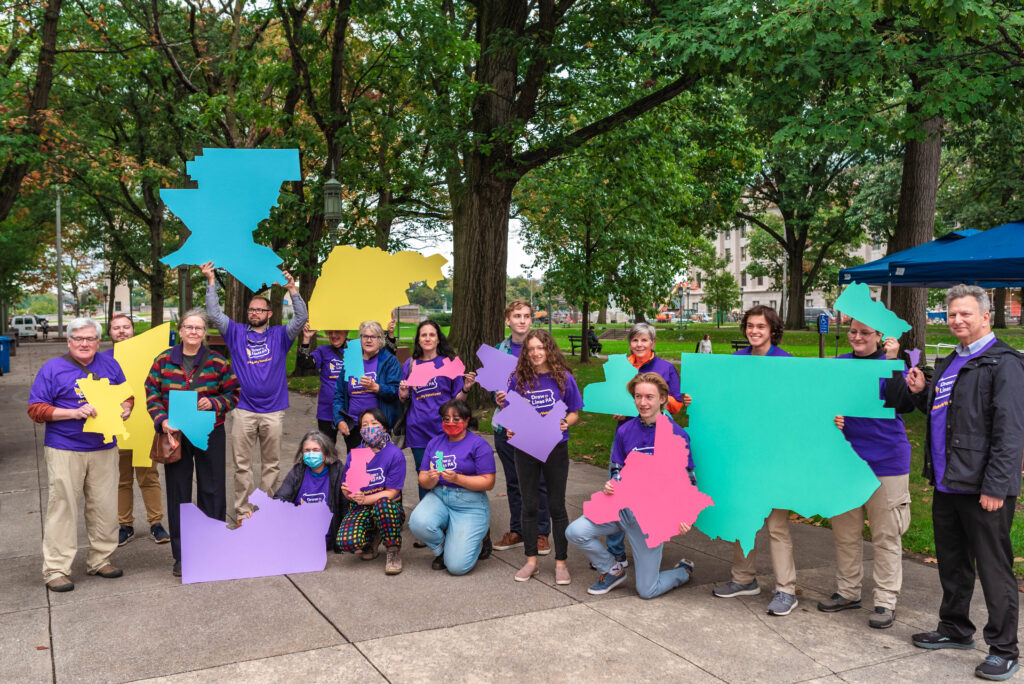
Fortunately, increased transparency in the post-2020 process created fairer, more representative maps. The Committee of Seventy played a key role in that work, including urging voters across the state to draw their own maps with Draw the Lines PA to fight for fairness in the redistricting process. In 2018, we were also honored to have Governor Tom Wolf appoint our former President and CEO David Thornburgh to chair the Pennsylvania Redistricting Reform Commission, which released its final report in August 2019 and established a blueprint for transparent line-drawing. With our partnership with Fair Districts PA, we continue to advocate for an independent commission and increased transparency.
Visit drawthelinespa.org to learn how you can participate in reform and follow DTL on Facebook and Twitter.
Draw The Lines PA
In September 2018, the Committee of Seventy launched Draw the Lines PA, which became the largest known political mapping competition in the country’s history. Offering significant cash prizes up to $5,000, this nonpartisan contest puts the same digital tools used by the political pros into the hands of Pennsylvania’s voters and students.
Draw the Lines demonstrates that voters can lead a process that produces far better maps and a renewed sense of civic engagement among Pennsylvanians. Visit DTL’s website, drawthelinespa.org, to learn how you can enter your own maps into the competition.
Read David Thornburgh’s Testimony on Congressional Redistricting
Read the Bipartisan PA Redistricting Reform Commission’s Final Report
Watch David Thornburgh on the Importance of Fair Elections

Draw The Lines PA
Learn more about Draw The Lines PA, a nonpartisan resource from the Committee of Seventy for Pennsylvanians who want to end gerrymandering.